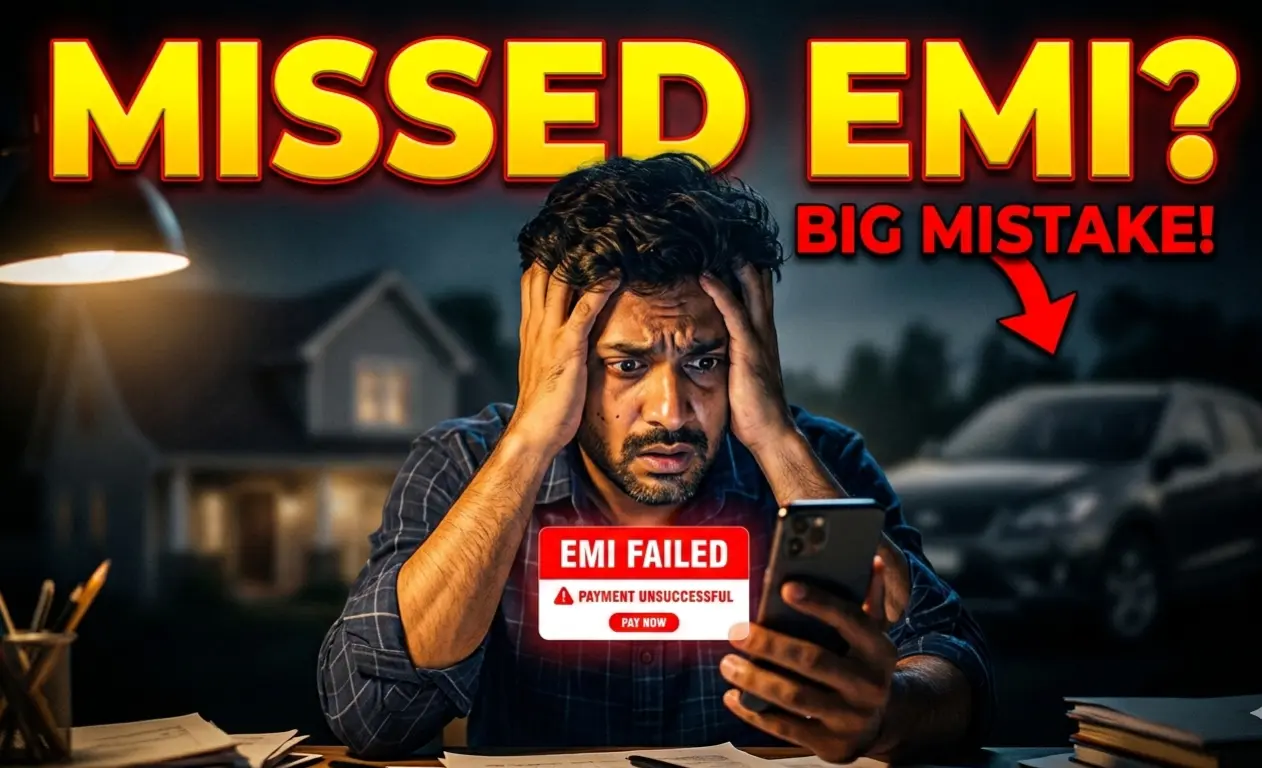

There’s a unique kind of anxiety that what happens if you miss an EMI, maybe your salary was delayed, maybe an unexpected hospital bill disrupted your budget, or maybe expenses quietly piled up until one due date suddenly felt overwhelming. If you’re facing this situation, take a deep breath.
Table of Contents
Missing an EMI is serious but it is not the end of your financial journey. An equated monthly installment (EMI) is more than just a scheduled payment. It represents a promise you made when you borrowed money whether for your dream home, a car, higher education, or a personal emergency. Banks like State Bank of India, HDFC Bank, and ICICI Bank design EMIs to make repayment manageable over time. But life doesn’t always move according to plan.
What happens if you miss an EMI ?
The first few days: A warning, not a disaster
If you miss your EMI by a few days, the consequences may not be immediate or catastrophic. Some lenders offer a short grace period. You may receive reminder messages or calls informing you about the missed payment. At this stage, the situation is still manageable.
However, even within this brief window, late fees might begin to apply depending on your lender’s policy. It’s important to remember that every bank operates differently, and the terms mentioned in your loan agreement matter more than assumptions, what you do in these early days can make a significant difference.
Read More
CIBIL score is not mandatory for first time borrower
Unified pension scheme benefits and details
Late fees and penal interest begin
Once the due date passes without payment, the lender may impose late payment charges. This can include a fixed penalty fee, additional penal interest on the overdue amount, and sometimes bounce charges if your auto debit failed due to insufficient funds.
For personal loans or credit card EMIs, these penalties can be particularly high. A small delay can slowly snowball into a larger burden if ignored. What felt like a temporary cash flow issue can begin to grow into a financial setback.This is often the moment when stress kicks in.
You might start avoiding bank calls or postponing action, hoping the situation will resolve itself. Unfortunately, ignoring the problem rarely helps.
The Impact on your credit score
How credit reporting works
In India, credit behavior is monitored by agencies such as TransUnion CIBIL and Experian. Lenders report your repayment activity to these bureaus regularly.
If your EMI remains unpaid beyond 30 days, it is usually reported as a delayed payment. This can cause your credit score to drop significantly sometimes by 50 to 100 points depending on your credit profile.Your credit score is not just a number.
It affects your ability to secure future loans, credit cards, or even favorable interest rates. A lower score can make borrowing more expensive or more difficult in the future.
How long does the damage last?
A missed EMI does not disappear overnight, late payment records can remain on your credit report for years, often up to seven, however, the impact reduces over time if you return to consistent, timely payments. Think of it like rebuilding trust, ine mistake hurts, but steady discipline repairs your financial reputation gradually.
What happens If you continue missing EMIs?
Increased follow ups and collection efforts
If your EMI remains unpaid for 30 to 60 days, lenders typically intensify their follow up efforts. You may receive repeated calls, emails, or formal notices. While this can feel overwhelming, remember that lenders are trying to recover their money not harass you personally. Open communication at this stage can prevent further escalation. Silence, on the other hand, can make the situation worse.
Loan Account Classification as NPA
If payments remain overdue for more than 90 days, the loan may be classified as a Non Performing Asset (NPA). This is a serious classification in banking terms. It signals that the loan is unlikely to be repaid under normal circumstances.
At this point, lenders may initiate recovery proceedings for secured loans like home or car loans, legal mechanisms such as the SARFAESI Act allow banks to recover dues by seizing and auctioning the asset, after following due process.
The thought of losing a home or vehicle is deeply distressing. But it’s important to understand that such actions happen only after prolonged non payment and multiple notices.
Emotional toll of missing an EMI
Silent stress no one talks about
Financial stress is not just about numbers, it affects mental well being, when you miss an EMI, you may feel guilt, embarrassment, fear, or even shame. You might hesitate to discuss it with family members. You may avoid answering unknown phone calls, this emotional burden can be heavier than the financial penalty itself.
But here’s something reassuring, many borrowers experience temporary setbacks Job losses, salary cuts, medical emergencies, and economic slowdowns are realities of life, missing an EMI doesn’t define your character or your future.
What you should do if you miss an EMI
Act quickly instead of panicking
If you realize you’ve missed a payment, the best step is immediate action. Pay the overdue amount as soon as possible, the faster you clear it, the lower the financial and credit impact.If you’re unable to pay right away, contact your lender proactively.
Banks such as Axis Bank and Punjab National Bank often offer solutions like EMI rescheduling or short term relief options, depending on your repayment history.
When you approach them early and honestly explain your situation, you increase your chances of finding a workable solution.
Consider loan restructuring
If your financial difficulty is not temporary, you may request loan restructuring, this can involve extending the loan tenure to reduce monthly EMI, temporarily deferring payments, or adjusting the repayment schedule. While restructuring may increase total interest over time, it can provide breathing space during financial hardship.
Protect your credit going forward
Even if one EMI was missed, focus on ensuring no further delays occur, resume regular payments and maintain discipline, over time, your credit score can recover,If you suspect an error in reporting, you can raise a dispute with the relevant credit bureau, regularly checking your credit report helps you stay informed and prepared.
Different loans, different risks
Home Loan EMI
Missing a home loan EMI carries serious long term consequences because of the large loan amount involved, prolonged default may eventually lead to property seizure, though lenders typically exhaust other options before reaching that stage.
Car Loan EMI
In the case of car loans, continued non payment can lead to vehicle repossession, if the car is auctioned and the sale amount doesn’t cover the full outstanding loan, you may still need to pay the remaining balance.
Personal loan or credit card EMI
Unsecured loans often carry higher interest rates and penalties, missing these EMIs can become expensive quickly due to compounding interest and late charges.
Can you recover from a missed EMI?
Yes, One missed EMI does not permanently destroy your financial credibility, lenders look at your overall repayment history, If the delay was an isolated incident and you resume consistent payments, the impact fades over time.
Financial discipline, emergency savings, and cautious borrowing are your strongest safeguards. Ideally, your total EMIs should not exceed 40–50% of your monthly income, building an emergency fund that covers at least three to six months of EMIs can provide security during uncertain times.
Conclusion:-
A Setback, Not a Failure missing an EMI feels frightening in the moment, the calls, the penalties, the fear of credit damage, it can all feel overwhelming. But remember this, a missed EMI is a financial setback, not a life sentence. Avoid ignoring the issue, communicate with your lender, take responsibility, but don’t carry unnecessary shame, many financially responsible individuals face temporary struggles.Your financial story is not defined by one missed payment, it is shaped by how you recover, rebuild, and move forward with wiser decisions.
Frequently asked questions
Q1. What happens if you miss an EMI in HDFC?
Ans. If you miss an EMI with HDFC Bank, the bank usually charges a late payment fee along with penal interest on the overdue amount. In the first few days, you may receive reminder messages or calls. If the payment remains unpaid for more than 30 days, the delay may be reported to credit bureaus such as TransUnion CIBIL, which can reduce your credit score. The longer the delay continues, the more serious the consequences become. However, if you act quickly and clear the dues, the impact can be minimized.
Q2. What happens if EMI is missed by one day?
Ans. Missing an EMI by just one day usually does not cause major damage,most banks allow a short operational buffer, especially in cases of technical delays. However, you may still be charged a late fee or auto debit bounce charge if there were insufficient funds in your account. Importantly, your credit score is typically not affected unless the delay crosses 30 days and is officially reported. Paying immediately after realizing the delay is the smartest move to prevent further penalties.
Q3. What happens if EMI is not deducted due to insufficient balance?
Ans. If your EMI auto debit fails because of insufficient balance, the bank may impose bounce charges and start applying penal interest, you will likely receive notifications reminding you to clear the overdue amount. If the EMI remains unpaid beyond 30 days, it can be reported to credit bureaus like Experian, negatively affecting your credit score. To avoid this situation, it is important to maintain sufficient balance in your account at least a few days before the due date.
Q4. How can you pay a missed EMI in HDFC?
Ans. If you have missed an EMI with HDFC Bank, you can usually pay it through net banking, mobile banking, or the official loan repayment portal. In some cases, once you deposit the required amount in your linked bank account, the EMI may be re presented for deduction. If you are facing financial hardship, contacting the bank directly and discussing possible solutions like EMI rescheduling or restructuring can help. Proactive communication always works better than avoiding calls.
Q5. Does your phone get locked if EMI is not paid?
Ans. Whether your phone gets locked depends on how it was financed, if you purchased your smartphone through certain fintech or digital lending platforms that install device control software, the phone may be temporarily locked if EMIs remain unpaid for a prolonged period. However, if you bought it using a traditional bank EMI or credit card EMI, your phone generally does not get locked. Instead, the consequences involve late fees, higher interest, and possible credit score damage. Always check the terms and conditions of your loan agreement to understand the specific risks.
Q6. Will missing one EMI affect your credit score?
Ans. Yes, missing one EMI can affect your credit score if the payment remains overdue for more than 30 days and is reported to credit bureaus. A single missed EMI can lower your score significantly, especially if you previously had a strong repayment record. However, the impact is not permanent. By resuming timely payments and maintaining financial discipline, your score can gradually recover over time.
Q7. What happens if you miss EMI for two or three months?
Ans. If EMIs remain unpaid for 60 to 90 days, the situation becomes serious. Recovery calls and notices may increase, and after 90 days, the loan can be classified as a Non Performing Asset (NPA). In the case of secured loans like home or car loans, lenders may initiate legal recovery processes. Prolonged default severely damages your credit history and can make future borrowing difficult. Acting early is always better than waiting for the issue to escalate.
Q8. Can late payment charges be waived?
Ans. In some cases, banks may consider waiving late payment charges if you have a strong repayment history and a genuine reason for delay, such as a technical issue or salary delay. While approval is not guaranteed, politely requesting a waiver and explaining your situation can sometimes work in your favor.