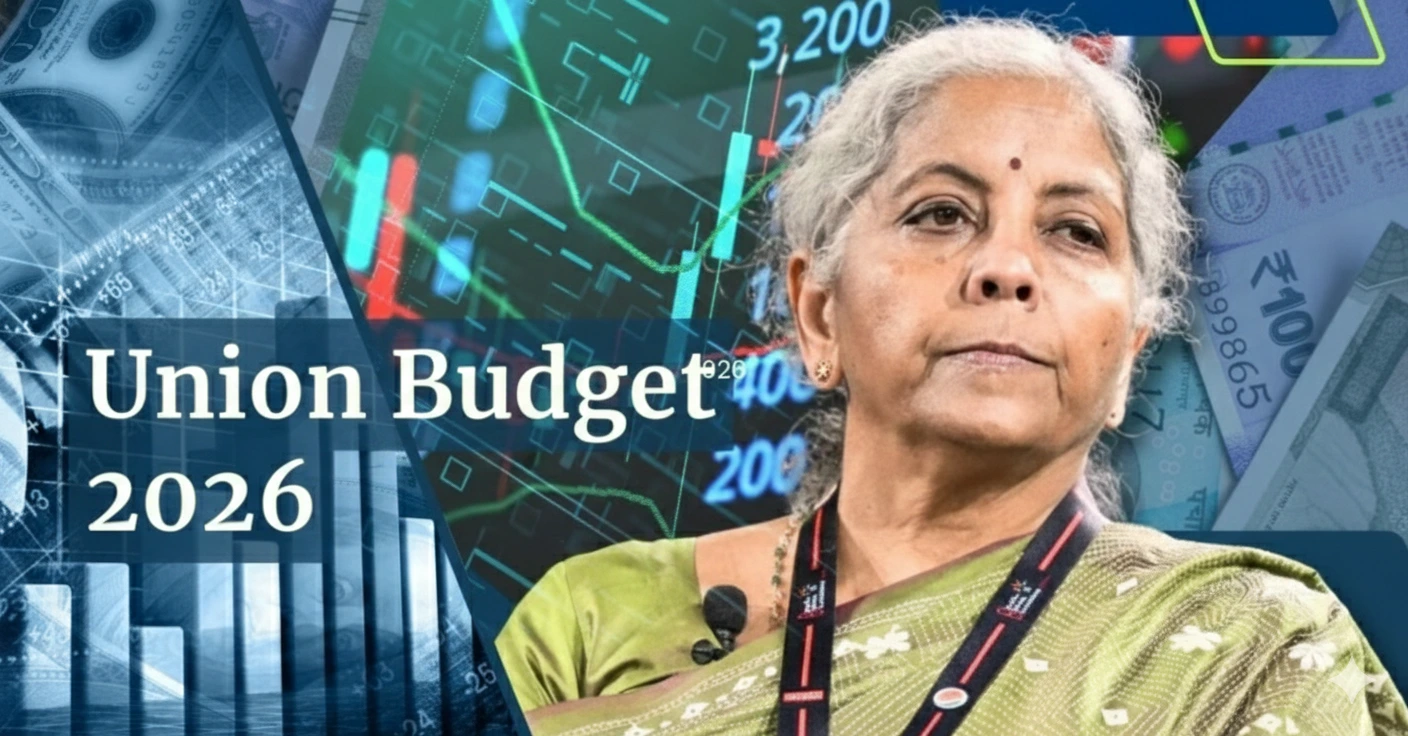

India’s Budget 2026 is expected to include, focusing on government spending, taxes, defence, exports, and the fiscal deficit.
The Finance Minister is expected to outline how the government plans to spend money, raise taxes, support industries, and manage national debt. Experts believe this budget will focus on stability, growth, and stronger global trade.
Here are the key areas people are watching closely.
1. Infrastructure Spending:- Economists believe the government will continue to invest heavily in roads, railways, ports, and public buildings. Capital spending is expected to remain close to about 3% of India’s total economic output (GDP)Even
though income tax and consumption tax cuts may reduce government revenue, spending on infrastructure is still likely to increase slightly. It is expected to rise from around Rs. 11.2 trillion this year to nearly Rs. 12 trillion next year. However, large jumps in spending may be difficult due to budget limits.
2. Fiscal Deficit and Borrowing:-The fiscal deficit is the gap between what the government earns and what it spends. For 2026–27, the government is likely to aim for a deficit of around 4.2% of GDP, slightly lower than this year’s level.
To cover its spending needs, the government will need to borrow more money. Gross borrowing is expected to increase to around Rs. 16–16.8 trillion, compared with Rs. 14.6 trillion this year.Over the long term, India plans to reduce government debt.
By 2031, debt is expected to fall to around 49%–51% of GDP, compared to about 56% now. This is important for keeping investors confident in India’s economy.
3. Defence and Security:-After recent tensions with Pakistan, India’s Defence Ministry is asking for a large increase in military spending about 20% more than before. This money would be used to strengthen national security and modernize equipment.The government is also likely to make it easier for foreign companies to invest in India’s defence sector.
This could help bring in new technology and create jobs.Business groups have suggested setting up special defence manufacturing zones and an export promotion body to help India sell military equipment abroad. The goal is to reach defence exports worth $5.5 billion by 2029.
4. Taxes and Business Rules:- Tax experts and industry leaders are pushing for changes to make India more business friendly.One major request is the removal of the securities transaction tax, which is charged on stock and derivatives trades, even when traders lose money. Removing this tax could help increase activity in financial markets.
Industry bodies such as FICCI have also asked for changes in income tax rules that make it harder for companies like Apple and other manufacturers to supply machinery to Indian contract manufacturers. Easing these rules could support India’s manufacturing growth.
5. Exports and Trade:– Support exporters are facing challenges, especially because of high tariffs imposed by the United States on Indian goods. To help them, export organizations are asking the government to reduce import duties on raw materials such as textiles, electronic parts, and chemicals. Lower input costs would make Indian products cheaper and more competitive in global markets. Exporters are also requesting easier regulations and access to long-term financing so they can expand production and survive global trade pressures.
Conclusion:-India’s Budget 2026 is expected to focus on balancing growth with financial discipline. The government aims to continue spending on infrastructure, strengthen defence, support exporters, and slowly reduce its debt.While there are limits due to tax cuts and borrowing needs, the overall goal remains clear build a stronger, more competitive, and more stable Indian economy for the future.