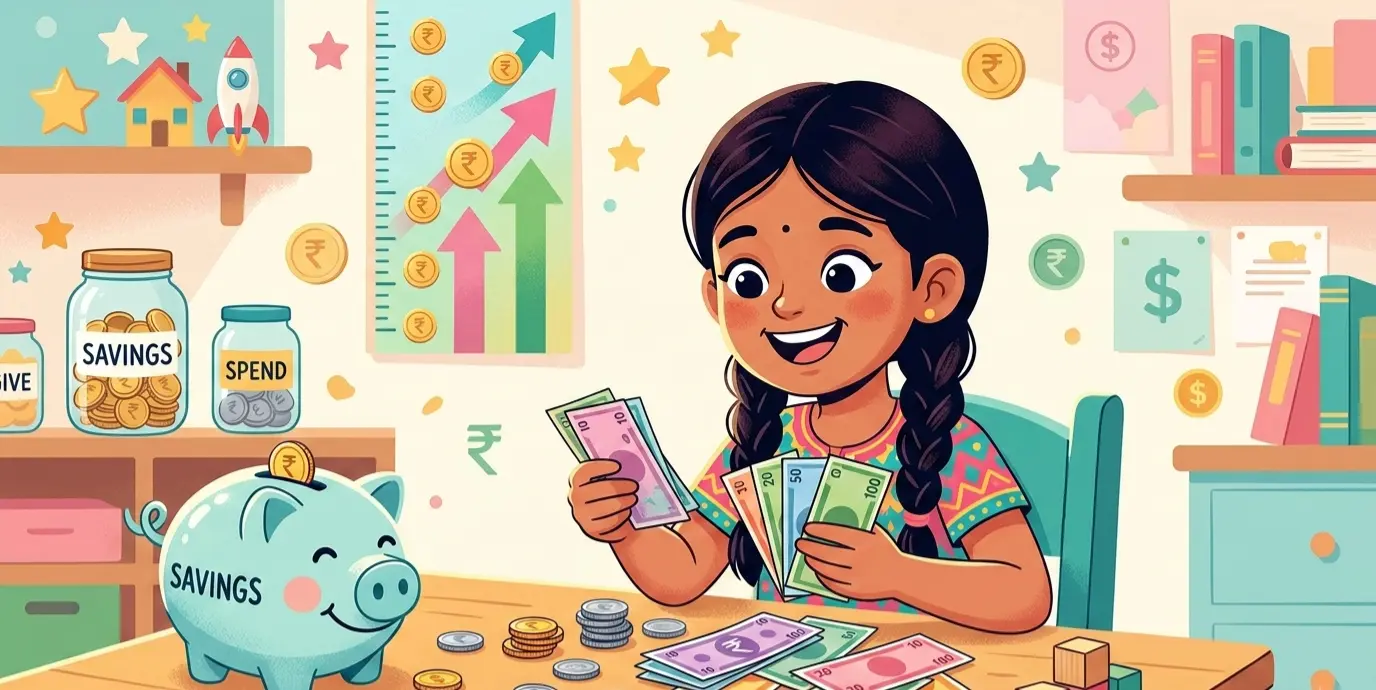

Best ways to teach kids about money is one of the most valuable life lessons parents and educators can give. In a world where digital payments, online shopping, and easy credit are everywhere, financial understanding is no longer optional it is essential.
Table of Contents
The best ways to teach kids about money
focus not only on earning and spending, but also on mindset, responsibility, patience, and long term thinking. When children learn these skills early, they grow into adults who can make confident, informed financial decisions and avoid common money mistakes.
Why teaching Kids about money early is Important
Children start forming money habits much earlier than most adults realize. By the age of seven, many financial behaviors are already taking shape. Kids observe how parents spend, save, and talk about money, even if no formal lesson is given.
When money is treated as a taboo topic, children grow up confused or anxious about finances. On the other hand, open and age appropriate conversations build clarity and confidence.
One of the best ways to teach kids about mone is to help them understand that money is a tool, not a goal. Money helps us meet needs, fulfill wants, support others, and plan for the future.When
kids learn this perspective early, they are less likely to develop unhealthy habits like impulsive spending or fear of money.
CIBIl score is not mandatory for first time borrower-Read More
LIC FD scheme and tax benefit-know more
Unified Pension scheme 2026-Read More
Starting with basic money Awareness at a young age
For young children, money education should begin with simple awareness. Kids do not need complex explanations about banks or investments at this stage. They need to understand that money is earned, limited, and used to exchange for goods and services. When a child sees you paying at a store, explaining in simple words that money is exchanged for food or toys helps build this connection.
Among the best ways to teach kids about mone at an early age is involving them in everyday activities. Taking them grocery shopping and talking about prices, choices, and budgets helps them realize that money requires decisions. Even simple statements like “We are choosing this because it costs less and still works well” introduce the idea of value.
Teaching the difference between needs and wants
Understanding the difference between needs and wants is a foundation of financial literacy. Children naturally desire many things, especially in an advertisement driven world. One of the best ways to teach kids about mone is to calmly explain that some things are necessary, such as food, clothing, and education, while others are optional, like toys or video games.
Instead of saying “we can’t afford it,” which may create fear, parents can explain priorities. When kids learn that money is allocated first to needs and then to wants, they begin to develop logical spending habits. Over time, this understanding helps children avoid emotional spending and appreciate what they have.
Using allowance as a learning tool, not free money
Allowance is often misunderstood. When used correctly, it is one of the best ways to teach kids about money. Allowance should not simply be pocket money given without purpose. Instead, it should act as a controlled environment where children learn budgeting, saving, and decision making.
Giving a small regular allowance allows kids to experience real financial choices. When a child spends all their allowance quickly and has nothing left later, it becomes a natural lesson about planning. Parents should avoid rescuing children every time they run out of money, as small failures teach powerful lessons in a safe way.
Teaching the habit of saving with clear goals
Saving money can be abstract for children unless it is connected to a goal. One of the best ways to teach kids about mone is to help them save for something meaningful to them. Whether it is a toy, a book, or a bicycle, having a clear goal makes saving exciting and purposeful.When children set a goal and track progress, they learn patience and delayed gratification.
This habit is crucial for adulthood, where long term goals like education, travel, or home ownership require consistent saving. Parents can support this process by matching a portion of savings or celebrating milestones, reinforcing positive behavior without pressure.
Introducing the concept of earning money
Children should understand that money is earned through effort, skill, or time. One of the best ways to teach kids about mone is to give them opportunities to earn money in age appropriate ways. Simple tasks, creative projects, or helping with family responsibilities can be linked to earning.
This does not mean paying for every basic duty, but rather creating special earning opportunities. When children earn money, they value it more and think carefully before spending. This understanding also builds confidence, as kids realize they are capable of contributing and being financially independent in small ways.
Teaching smart spending through real life decisions
Spending wisely is just as important as saving. One of the best ways to teach kids about money is to let them make spending decisions and experience the outcomes. When children choose how to spend their own money, they learn to compare options, evaluate value, and live with their choices.
Parents should guide spending discussions without controlling every decision. Asking questions like “Do you think this is worth the price?” or “Will you still enjoy this next week?” encourages critical thinking. Over time, children develop the ability to make thoughtful financial decisions rather than impulsive ones.
Explaining mistakes as learning opportunities
Mistakes are an unavoidable part of financial learning, one of the best ways to teach kids about mone is to treat mistakes as lessons, not failures. If a child regrets a purchase, it becomes a valuable moment to reflect and learn.
When parents respond with patience instead of criticism, children feel safe discussing money openly. This openness builds trust and encourages kids to seek guidance rather than hiding financial problems in the future, learning from small mistakes early prevents larger, more damaging ones later in life.
What is CIBIL score and why it is important-Read More
Introducing banking concepts in a simple way
As children grow older basic banking concepts can be introduced, understanding savings accounts, digital payments, and interest helps children see how money works beyond cash.
One of the best ways to teach kids about mone at this stage is to involve them in simple banking activities. Opening a savings account in their name or showing them how online balances work builds familiarity with financial systems.
Explaining that money in a bank can grow over time introduces the idea of interest without complexity. These lessons prepare kids for responsible financial behavior as teenagers and adults.
Teaching budgeting as a life skill
Budgeting is often seen as restrictive, but it is actually empowering. One of the best ways to teach kids about mone is to frame budgeting as a way to make money work for them. When children learn to plan how they will use their money, they feel more in control.
Simple budgets based on allowance or earnings help kids understand limits and priorities. Over time, budgeting becomes a natural habit rather than a forced rule. This skill is essential for managing future responsibilities like education expenses, rent, and personal goals.
Encouraging generosity and social responsibility
Money education is not complete without teaching values. One of the best ways to teach kids about mone is to include generosity and empathy. Children should understand that money can also be used to help others and support causes they care about.Encouraging
kids to donate a small portion of their money or help someone in need builds emotional intelligence and social awareness. This practice teaches balance money is not just for personal use but also a means to create positive impact.
Talking openly about family financial decisions
Children benefit greatly from transparency at an appropriate level. One of the best ways to teach kids about money is to include them in simple family financial discussions.
This does not mean sharing stress or problems, but explaining decisions like saving for a trip or choosing one expense over another.
When kids understand the reasoning behind decisions, they learn problem solving and long term thinking. It also reduces unrealistic expectations and builds respect for financial planning.
Teaching digital money and online safety
In today’s world, children are exposed to digital money early. One of the best ways to teach kids about money is to explain online spending, digital wallets, and security in simple terms. Kids should know that digital money is real money and must be protected.
Teaching safe habits like not sharing payment details and understanding in app purchases helps prevent costly mistakes. This knowledge is especially important as children begin using smartphones and online platforms.
Preparing teenagers for real-world financial responsibility
As children enter their teenage years, money education should become more practical. One of the best ways to teach kids about mone at this stage is to prepare them for independence. Topics like managing monthly expenses, understanding income, and planning for future goals become essential.
Teenagers who learn these skills early are better prepared for adulthood. They are more likely to avoid debt traps, manage earnings responsibly, and make informed choices about education and career paths.
Building a healthy money mindset
Beyond skills mindset plays a crucial role in financial success. best ways to teach kids about money is to promote a healthy attitude toward wealth and success.
Children should learn that money is not a measure of self worth, but a resource to be managed wisely.
Positive language around money reduces fear and anxiety. When kids believe they can learn and improve their financial skills, they develop confidence and resilience that lasts a lifetime.
Conclusion: best ways to teach kids about money
Teaching children about money is a long term process, not a one time lesson. The best ways to teach kids about mone involve everyday experiences, open conversations, guided independence, and strong values. When children learn to earn, save, spend, and give responsibly, they gain skills that shape their entire future.
By starting early and staying consistent, parents and educators can raise financially confident kids who are prepared for real life challenges. These lessons do more than teach money management they teach responsibility, patience, and thoughtful decision making. In the end, helping children understand money is one of the greatest gifts we can give them, ensuring a more secure and confident future.
Frequently Asked Questions (FAQ): Best Ways to Teach Kids About Money
Q1. At what age should parents start teaching kids about money?
Ans. Parents can start teaching kids about money as early as 3 to 4 years old. At this stage, children can understand simple ideas like exchanging money for items and that money is limited. Early exposure builds familiarity and reduces confusion later. The best ways to teach kids about mone begin with everyday conversations rather than formal lessons.
Q2. Why is it important to teach kids about money at a young age?
Ans. Teaching kids about money early helps shape healthy financial habits. Children who understand earning, saving, and spending grow up more confident and responsible with finances. One of the best ways to teach kids about mone is to help them avoid future problems like debt, impulsive spending, and poor financial planning.
Q3. How can parents teach kids about money without making it stressful?
Ans. Money education should feel natural, not stressful. Parents can talk calmly about daily spending, saving for goals, and making choices. Avoid arguments or fear-based discussions. The best ways to teach kids about mone involve positive language, real-life examples, and patience.
Q4. Is giving allowance a good idea for teaching money skills?
Ans. Yes, allowance can be a powerful learning tool when used correctly. It helps children practice budgeting, saving, and decision-making. One of the best ways to teach kids about mone is to treat allowance as a learning experience, not free money, and allow kids to make small mistakes.
Q5. Should kids be paid for household chores?
Ans. Basic household responsibilities should usually not be paid, as they teach teamwork. However, extra tasks or special projects can be linked to earning money. This approach supports one of the best ways to teach kids about mone by showing that money is earned through effort.
Q6. How can parents teach kids the habit of saving money?
Ans. Saving becomes easier when children have a clear goal. Encourage kids to save for something they truly want and track their progress. The best ways to teach kids about mone include making saving visible and rewarding consistency rather than the amount saved.
Q7. What is the best way to explain the difference between needs and wants?
Ans. Parents can explain that needs are essentials like food and education, while wants are extras like toys or games. Using real-life examples helps children understand priorities. Teaching this distinction is one of the best ways to teach kids about mone and control unnecessary spending.
Q8. How can kids learn smart spending habits?
Ans. Kids learn smart spending by making their own choices and experiencing outcomes. Parents should guide, not control, these decisions. Asking reflective questions helps children think before spending, which is one of the best ways to teach kids about mone in a practical way.
Q9. Is it okay if kids make money mistakes?
Ans. Yes, small money mistakes are valuable learning opportunities. When handled calmly, mistakes teach responsibility and planning. One of the best ways to teach kids about mone is allowing safe failures early so they avoid bigger financial problems later.
Q10. How can parents introduce banking concepts to kids?
Ans. Parents can start with simple ideas like saving money in a bank and checking balances. As kids grow, concepts like interest and digital payments can be explained. Gradual exposure is one of the best ways to teach kids about mone in a modern world.
Q11. Should kids learn about digital money and online spending?
Ans. Absolutely. Kids should understand that digital money is real money. Teaching online safety, in-app purchases, and secure habits is one of the best ways to teach kids about mone in today’s digital environment.
Q12. How can teenagers be prepared for real-world financial responsibility?
Ans. Teenagers should learn budgeting, managing income, and planning future expenses. Giving them controlled responsibility builds confidence. Preparing teens early is among the best ways to teach kids about mone before adulthood.
Q13. How can parents teach generosity along with money management?
Ans. Encouraging kids to share or donate a small part of their money builds empathy. This balance teaches that money is not only for personal use. Including generosity is one of the best ways to teach kids about mone with strong values.
Q14. What role do parents play in shaping a child’s money mindset?
Ans. Parents are role models. Children observe how parents save, spend, and talk about money. A positive attitude toward finances is one of the best ways to teach kids about mone and build lifelong confidence.
Q15. What is the biggest mistake parents make when teaching kids about money?
Ans. The biggest mistake is avoiding money discussions altogether or being overly controlling. Open communication and guided independence are the best ways to teach kids about mone effectively and naturally.